
The AI Agent Framework Wars: Why Big Tech is Giving Away the Future
Written by Abdul Alim (Follow me on X: @CrazzyAlim)
If you were around for the “Container Wars” of 2015, the current AI landscape feels like a massive case of déjà vu. Back then, Docker Swarm, Mesos, and Kubernetes were fighting for dominance. Today, we are seeing a similar battle unfold with AI Agent Framework Wars. Big Tech isn’t just releasing code; they are fighting to become the default substrate for the agentic era. My name is Abdul Alim, and today we’re dissecting a brilliant analysis from The New Stack on why the “Kubernetes of AI” hasn’t quite arrived yet—and why Big Tech is giving away the keys to the castle.
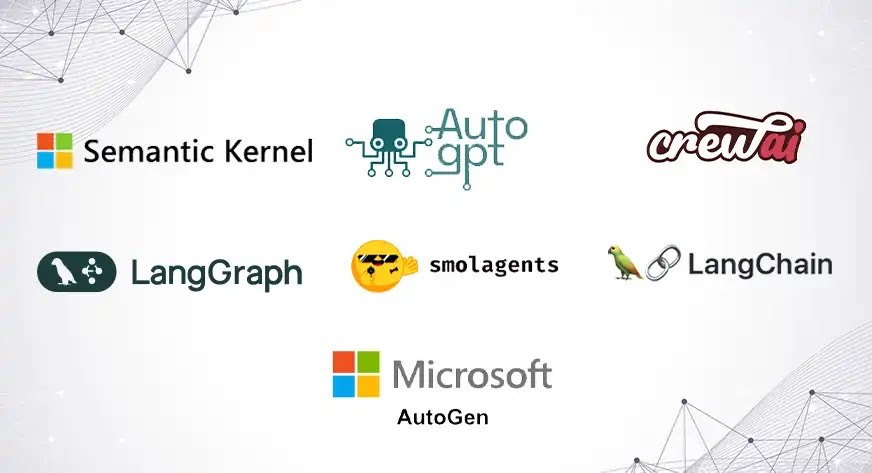
In a recent piece by Janakiram MSV on The New Stack, the parallels between 2015’s container orchestration and 2026’s agent frameworks are striking. Whether it’s LangChain, CrewAI, or Microsoft’s AutoGen, every player is racing to absorb the ecosystem. But as I often discuss on X (@CrazzyAlim), the real winner won’t be a framework—it will be a protocol.
The Framework Shakeout: History Repeating Itself
In 2015, Kubernetes won not because it was technically perfect, but because it had the deepest hyperscaler backing and community gravity. In the AI Agent Framework Wars, we are seeing the same pattern. Frameworks like LangGraph and PydanticAI are competing to define how agents communicate, plan, and execute tasks.
The “hidden reason” Big Tech is giving these frameworks away for free? They want to lock you into their cloud ecosystems. If you build your agents on a specific provider’s framework, you’re more likely to use their inference, their vector databases, and their monitoring tools. It’s a classic platform play, and it’s happening at a record pace.
Learn the Future of AI with StudyHelper.io
Navigating the AI Agent Framework Wars requires constant learning. That’s why I built StudyHelper.io. While the giants fight over frameworks, you can use our AI-powered tools to master the underlying tech. Here’s how we help you stay ahead:
- 📺 YouTube to Study Material: Turn long technical keynotes and framework tutorials into structured guides and cheat sheets.
- 🎙️ Generate Podcasts: Convert deep-dive articles (like this analysis!) into high-quality podcasts so you can learn about agent orchestration during your commute.
- 📓 Handwritten Notes to Structured Notes: Snap a photo of your architecture diagrams and let AI turn them into clean documentation.
- 🧠 Quiz Generator: Test your knowledge of MCP (Model Context Protocol) or PydanticAI to ensure you’re ready for the shift.
Master the agentic era today at StudyHelper.io.
The Shift to Protocols: The MCP Factor
One of the most critical arguments in The New Stack’s analysis is the shift from proprietary frameworks to open protocols. Just as the Container Runtime Interface (CRI) standardized containers, we are seeing the rise of the Model Context Protocol (MCP).
Instead of betting on a single framework, smart developers are betting on interoperability. If your agents can talk to each other regardless of the underlying language or library, you avoid the “framework trap.” This is where the real value lies for startups—building flexible, protocol-aware systems rather than rigid, framework-locked silos.
Frequently Asked Questions (FAQ)
Q: Which AI agent framework should I choose in 2026?
A: Look for frameworks that support open standards like MCP and offer easy integration with different LLM providers to avoid vendor lock-in.
Q: Why is Big Tech giving away AI frameworks for free?
A: To commoditize the orchestration layer and drive usage toward their high-margin cloud services and API inference.
Q: What is the Model Context Protocol (MCP)?
A: It is an open standard that allows AI models to easily connect to data sources and tools, reducing the need for custom “glue code” in every project.
Final Verdict: Bet on the Protocol
The AI Agent Framework Wars are just the beginning. As we move closer to a world of autonomous agents, the tools we use to manage them will become invisible infrastructure. My advice? Follow the history of containers: learn the frameworks, but build for the protocols. Stay tuned to my updates on LinkedIn as we track who becomes the “Kubernetes of AI.”
And remember, if you need to turn this complex tech into manageable knowledge, StudyHelper.io is your best friend.
Stay innovative,
Abdul Alim


Leave a Comment